
E. James Smith, a veteran New York-based filmmaker with decades of experience producing documentary-based video content for global firms like Goldman Sachs and MetLife, recently pivoted his focus. In 2025, he moved from traditional video production to mastering professional long-term time-lapse workflows. James’ Time-Lapse Now: https://www.time-lapsenow.com/

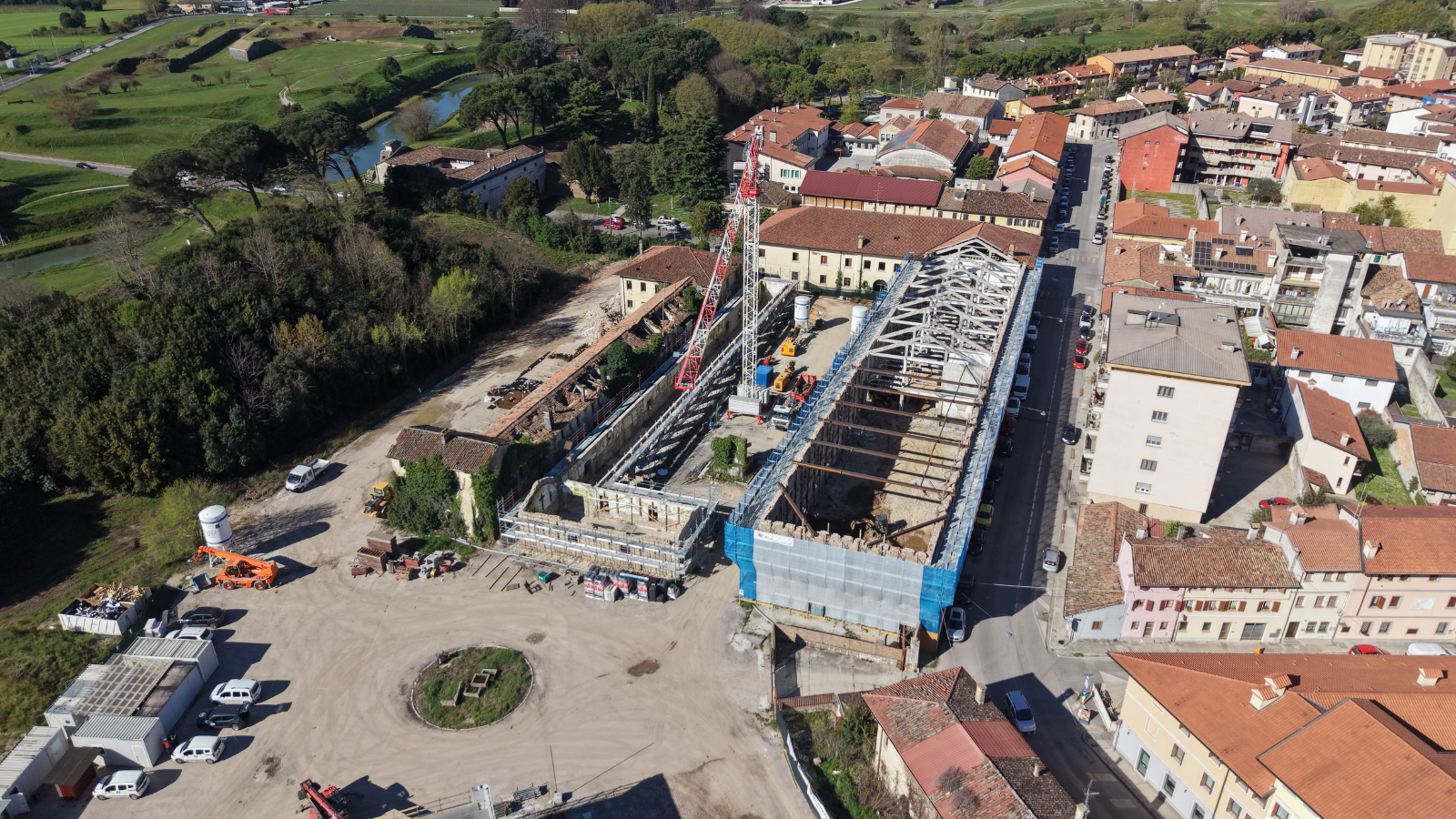
His milestone project? A three-month, high-stakes historic renovation of a synagogue sanctuary in Short Hills, New Jersey. To ensure 4K reliability and professional-grade results, James turned to the Brinno BCC5000.
The Challenge: Why Action Cameras and DSLRs Fail for Long-Term Construction
What were the challenges of time-lapse photography before using Brinno?
Before I found Brinno’s dedicated solutions, my setups were often fragile and low-resolution. My first introduction to this work involved a skyscraper project for Goldman Sachs. I used a security-camera system tethered to a computer that saved individual JPEGs. It was a nightmare to manually build the video in Final Cut Pro, especially when the on-site crew forgot to power the system, leaving huge gaps in my footage.
Overcoming Technical Limitations in Manhattan Projects
Later, I experimented with action cameras for shorter projects in Manhattan’s Chelsea neighborhood, but I hit three major 'deal-breakers':
-
Overheating during long-duration recording.
-
Battery life limitations that interrupted the story.
-
A distorted 'fish-eye' lens effect that looked unprofessional for architectural subjects.
🔼🔼Footage originates from 2001, over 20 years ago, when James did his first construction time lapse project. 🔼🔼
The Solution: Implementing a Professional 4K Time-Lapse Workflow
What started the synagogue renovation time-lapse?
The project began when a college friend, the rabbi of the synagogue, reached out about a major sanctuary renovation. I knew immediately that a time-lapse camera was the only way to capture the transformation effectively.
I didn't actually have dedicated equipment at the time, so I researched the best professional gear online. The Brinno 4K caught my eye because everything just 'clicked.' Within 24 hours of purchasing the camera, I had it positioned on-site. I utilized two cameras running at a 30-second interval to document the entire three-month construction phase seamlessly.
Choose the interval wisely, read ▶️▶️ Brinno tips.
Why choose the Brinno BCC5000 over a DSLR or Action Cam?
I narrowed my search at B&H Photo, looking for a system that wouldn't collapse under the pressure of long-term use. The Brinno BCC5000 was the clear winner for me because:
-
Dedicated Design: Unlike a DSLR, which is too expensive and complex to rig for months, Brinno is built specifically for time-lapse.
-
Power Management: The rechargeable battery and internal processing 'smoothed' my entire recording process.
-
Professional FOV: It provides a natural field of view without those curved 'fish-eye' edges.
My Professional On-Site Routine for High-Stakes Time-Lapse
I follow a repeatable field workflow to ensure high-stakes success.
Framing, Proofing, and Interval Strategy
-
Framing & Proof: "I take behind-the-scenes photos of my camera placement to document the shoot and improve my angles for the next job."
-
Interval Strategy: "My rule is simple—for long-term construction, I stick to 30-second intervals. For fast-moving NYC street scenes, I switch to 3-second intervals."
-
Redundant Coverage: "I always run at least two cameras on a single project. This gives me creative options in the edit and protects me if one angle gets blocked.
Learn how to do a construction time lapse ▶️▶️ Brinno Guide
Beyond Construction: Capturing New York City’s Urban Motion in 4K
While the BCC5000 is my long-term construction workhorse, I explore more cinematic, shorter-duration time-lapse shoots across New York City at 3-second intervals.
From Manhattanhenge to Grand Central Terminal
-
Golden Hour: Sunset over the Manhattan skyline and the 'Manhattanhenge' sunrise (Jan 12, 2026).
-
Seasonal Shifts: Winter snowfall in Central Park and shifting skies over Washington Square Park.
-
Immersive Audio: "For the 2025 Veterans Day Parade, I started adding natural soundscapes to my edits. It makes the time-lapse feel much more immersive and alive.
Expert Advice: How to Start Your First Professional Time-Lapse Project
What is your suggestion for people new to time-lapse?
My suggestion for new time-lapse camera users is to plan your shot carefully. Small adjustments make a big difference once time is compressed into seconds. Choose an interval that matches the pace of what you’re recording—30 seconds for construction, 3 seconds for fast-moving scenes.
If you’re shooting outdoors, stay aware of the sun's movement to avoid glare. Most importantly: build a repeatable workflow around power management and consistent setup habits so your time-lapse stays reliable from start to finish.